
"branch levels"
2000 article(s) found

Flavor description of Honduran Coffee beans introduction of Grinding Calibration method in Manor production area
The flavor description of Honduran coffee beans the grinding scale treatment method of the manor production area introduces that the granules of Honduran coffee beans are large in shape, uniform in size, uniform in color and shiny. In order to facilitate harvesting, farmers will prune the coffee trees to no more than 150 centimeters, because if they grow too high, they must set up ladders to pick, which is not only time-consuming, but also may be hurt by bending branches.

Introduction of Colombian Coffee Flavor Hope Manor Colombian Coffee characteristics Manor production area
The main varieties of Colombian coffee are small grains of coffee. Plants are small trees or large shrubs, 5-8 m tall, usually much branched at base; old branches gray-white, nodes dilated, young branches glabrous, compressed. Leaves thinly leathery, ovate-lanceolate or lanceolate, 6-14 cm long and 3.5-5 cm wide, tip long acuminate, acuminate part 10-15 mm long, base cuneate or slightly obtuse, rarely rounded, entire or
A brief introduction to the planting of Coffee Flavor description varieties in Santa Rita Manor, Colombia
The main varieties of Colombian coffee are small grains of coffee. In 1864, Jubal A. Early led Confederate troops to occupy parts of Montgomery County for a short time and attack the District of Columbia. On July 11, Confederate troops attacked Rockville Pike (MD-355), New Cut Road (now Viers Mill Road MD-586) via Rockville and Wheaton.

A brief introduction to the cultivation of sweet boutique coffee beans in Santa Rita Manor, geographical location, climate and altitude
At present, the coffee production of Vietnam in Asia has exceeded that of Colombia. In addition, Indonesia has also developed into the fourth largest coffee producer in the world. In 1721, French naval officer Gabriel Mathieu de Clieu went through difficulties and obstacles to bring the first coffee sapling from Africa to Martinique in Latin America.

A brief introduction to the description of the flavor, taste and aroma characteristics of fine coffee beans in Santa Rita Manor
A special combination of factors, latitude, altitude, soil, plant origin of species and varieties of coffee making in Colombia, rain patterns produced by the climate and tropical convergence of coffee growing areas, changing topography, luminosity, favorable temperature range throughout the year, moderate and Rain Water distribution, including selective logging.

A brief introduction to the description of high-quality coffee bean flavor, taste and aroma characteristics of Santa Rita Manor
[Santa Rita, Colombia] (deeply roasted in water) sucrose, clean, medium mellow thickness, Santa Rita Manor, located in Antioquia, Colombia, treats coffee in the traditional way: picking coffee cherries by hand. Then the coffee fruit is washed and dried in a scaffolding. The environment around the Andes makes this area
A brief introduction to the history and culture of the origin and development of boutique coffee beans in Santa Rita Manor
A special combination of factors, latitude, altitude, soil, plant origin of species and varieties of coffee making in Colombia, rain patterns produced by the climate and tropical convergence of coffee growing areas, changing topography, luminosity, favorable temperature range throughout the year, moderate and Rain Water distribution, including selective logging.

Introduction to the characteristics of Hope Manor, the main varieties of Coffee in Colombia
The main varieties of Colombian coffee are small grains of coffee. Plants are small trees or large shrubs, 5-8 m tall, usually much branched at base; old branches gray-white, nodes dilated, young branches glabrous, compressed. Leaves thinly leathery, ovate-lanceolate or lanceolate, 6-14 cm long and 3.5-5 cm wide, tip long acuminate, acuminate part 10-15 mm long, base cuneate or slightly obtuse, rarely rounded, entire or

Colombian Coffee Bean Flavor taste the manor area introduces Colombian boutique coffee beans Colombia
The main varieties of Colombian coffee are small grains of coffee. Plants are small trees or large shrubs, 5-8 m tall, usually much branched at base; old branches gray-white, nodes dilated, young branches glabrous, compressed. Leaves thinly leathery, ovate-lanceolate or lanceolate, 6-14 cm long and 3.5-5 cm wide, tip long acuminate, acuminate part 10-15 mm long, base cuneate or slightly obtuse, rarely rounded, entire or

Introduction of Colombian Coffee Flavor and Taste small Coffee Hope Manor Colombian Coffee Origin
The main varieties of Colombian coffee are small grains of coffee. Plants are small trees or large shrubs, 5-8 m tall, usually much branched at base; old branches gray-white, nodes dilated, young branches glabrous, compressed. Leaves thinly leathery, ovate-lanceolate or lanceolate, 6-14 cm long and 3.5-5 cm wide, tip long acuminate, acuminate part 10-15 mm long, base cuneate or slightly obtuse, rarely rounded, entire or

Coffee bean Katim CIFC7963
Characteristic small seed coffee, belongs to the Katim high generation variety, the plant is medium dwarf, the growth vigor is vigorous, the secondary character is stable, the crown top bud tender leaf is emerald green, the whole plant leaf color is dark green, the plant shape is columnar, the Internode is short, the branch is many, the growth is exuberant, the adaptability is wide, the drought resistance is strong, has the certain cold resistance ability, under the medium management level, the average dry bean yield is more than 200 kg. Seeds per kilogram

The name of coffee bean introduces the origin of the name of the family heirloom of Ethiopia-heirlooms.
Professional coffee knowledge exchange more coffee bean information please follow the coffee workshop (Wechat official account cafe_style) what we are concerned about, what is easier to understand is the level from the beginning to the lower level of the genus Coffee. You can take a look at the following picture to learn about the main commercial varieties (Species) of the genus Coffea Genus and its small variety branch (Varie).

A brief introduction to the treatment method of grinding degree and baking degree of sweet boutique coffee beans in Santa Rita Manor
[Santa Rita, Colombia] (deeply roasted in water) sucrose, clean, medium mellow thickness, Santa Rita Manor, located in Antioquia, Colombia, treats coffee in the traditional way: picking coffee cherries by hand. Then the coffee fruit is washed and dried in a scaffolding. The environment around the Andes makes this area
A brief introduction to the market price of boutique coffee beans in Santa Rita Manor with rich taste and endless aftertaste.
At present, the coffee production of Vietnam in Asia has exceeded that of Colombia. In addition, Indonesia has also developed into the fourth largest coffee producer in the world. In 1721, French naval officer Gabriel Mathieu de Clieu went through difficulties and obstacles to bring the first coffee sapling from Africa to Martinique in Latin America.

Colombia Hope Manor Coffee Flavor Taste Variety Features
1888 Washington Monument opens. In 1950, Colombia's resident population peaked at 802178. The population subsequently declined as a result of the gradual migration of inhabitants to the outskirts of the city. On March 29, 1961, residents of the District of Colombia gained the right to vote for president. It is the region with the most electoral votes per capita. 1974 Walter Washington becomes the first elected mayor of Colombia.
A brief introduction to the treatment method of grinding degree and baking degree of fine coffee beans in Santa Rita Manor
Growing coffee also requires daylight and proper shade, which is most suitable for planting on fertile soil or volcanic ash soil. Therefore, the origin of coffee is widely distributed in South America, Central America, the West Indies, Asia, Africa, Arabia, the South Pacific and Oceania. Such as Ethiopia and Tanzania in Africa, Brazil, Colombia, Jamaica, Guatemala and Mexico in Central and South America.

Introduction to the methods for the treatment of taste grindness of coffee varieties in Santa Rita Manor, Colombia
In 1864, Jubal A. Early led Confederate troops to occupy parts of Montgomery County for a short time and attack the District of Columbia. On July 11, Confederate troops attacked Rockville Pike (MD-355), New Cut Road (now Viers Mill Road MD-586) via Rockville and Wheaton to Fo, which is only five miles from the White House in the District of Columbia.

The treatment method of grinding degree and baking degree of fine coffee beans in Santa Rita Manor with rich taste and endless aftertaste
At present, the coffee production of Vietnam in Asia has exceeded that of Colombia. In addition, Indonesia has also developed into the fourth largest coffee producer in the world. In 1721, French naval officer Gabriel Mathieu de Clieu went through difficulties and obstacles to bring the first coffee sapling from Africa to Martinique in Latin America.

Introduction to the Flavor description Grinding scale of Ramon Coffee Bean in Colombia
Colombian Ramon Coffee Bean Variety characteristics treatment method Flavor description Grinding scale introduction Colombian coffee varieties are mainly small-grain coffee. Plants are small trees or large shrubs, 5-8 m tall, usually much branched at base; old branches gray-white, nodes dilated, young branches glabrous, compressed. Leaves thinly leathery, ovate-lanceolate or lanceolate, 6-14 cm long, 3.5-5 cm wide, tip long acuminate
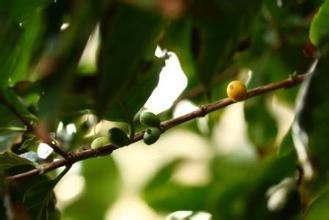
Coffee growing environment affects coffee growing environment and coffee quality Suitable soil and conditions
Coffee originated in tropical Africa, the origin of small species is the tropical plateau of Ethiopia, between 900 and 1800 meters above sea level, with an average annual temperature of 19. C. The medium-grained species originated in the tropical rain forest area of Congo, below 900 meters above sea level, with an annual average temperature of 21~26. C。They are native to shady or semi-shady forests and river valleys, so coffee needs calm wind, warm and humid